






























Loading0%

Hardcore Gamers.Trusted by Industry Leaders.Let’s Build Together.

100+ gamers powering a full-service game studio in the heart of Lahore, all under one roof since 2013.

Tell us about your project
TRUSTED BY
  • Netflix
  • Aeria Games
  • Coca-Cola
  • Dovetail Games
  • Cartoon Network
  • gameXcite
  • NVIDIA
  • edcoda
  • Lacoste
  • Junkfish
  • Ford
  • Mega Cat Studios
  • Mountain Dew
  • Bulkypix
  • hitBOX
  • Dream Fuel
  • Cube
  • David Martin
  • Slitherine
  • Epic Games
  • White Wizard Games
  • Mindscape
  • Paradox Interactive
  • Chimera Entertainment
  • Decentraland
  • Samsung
  • Still Alive Studios
  • The Sandbox

Core Services

Get in touch
Our low operational costs help provide our partners absurd value!
Across the ObeliskNecropolis of the Damned

Game Development

Full development, post-launch and porting on Unity and Unreal. Card games, MMORPGs, turn-based strategy, FPS and JRPGs for massive IPs, with console ports on every modern platform.

Explore development
Heroes of
Newerth

Game Art & Animation

Hands-on 2D and 3D creative pipelines, from concepts to final animated models and mobile-optimised marvels — scaling production flexibly without losing efficiency.

Explore art
Food
Fight

Backend & Multiplayer

Cross-platform multiplayer with tight command of asynchronous, real-time and turn-based play. FBOMB, our BaaS for Unity and Unreal, offers a huge, customisable range of multiplayer options.

Explore FBOMB backend
Food
Fight

QA & Game Design

Functional, compatibility and performance testing on all modern consoles and hardware, plus design from market research to meta-design and content for your next DLC.

Explore QA & design

Our Quest Log

From console adventures to mobile worlds, built for players everywhere.

See all projects
PORTINGUNITY

Within an impossible timeframe, we ported this Kingdom Builder from Flash to Unity, bringing it to millions of users past the Flash Farewell.

View project
PCSWITCHXBOX

Build your dream farm in the lovable town of Willowdale. Turn age-old rusty buildings and barren land into a lively and thriving farmland.

View project
GAME DEVELOPMENT2D

An arcade promotional game of the kickass Netflix show that launched with their third season: a beat ’em up featuring 8 of the beloved characters.

View project
OWN IPTURN-BASED TACTICS

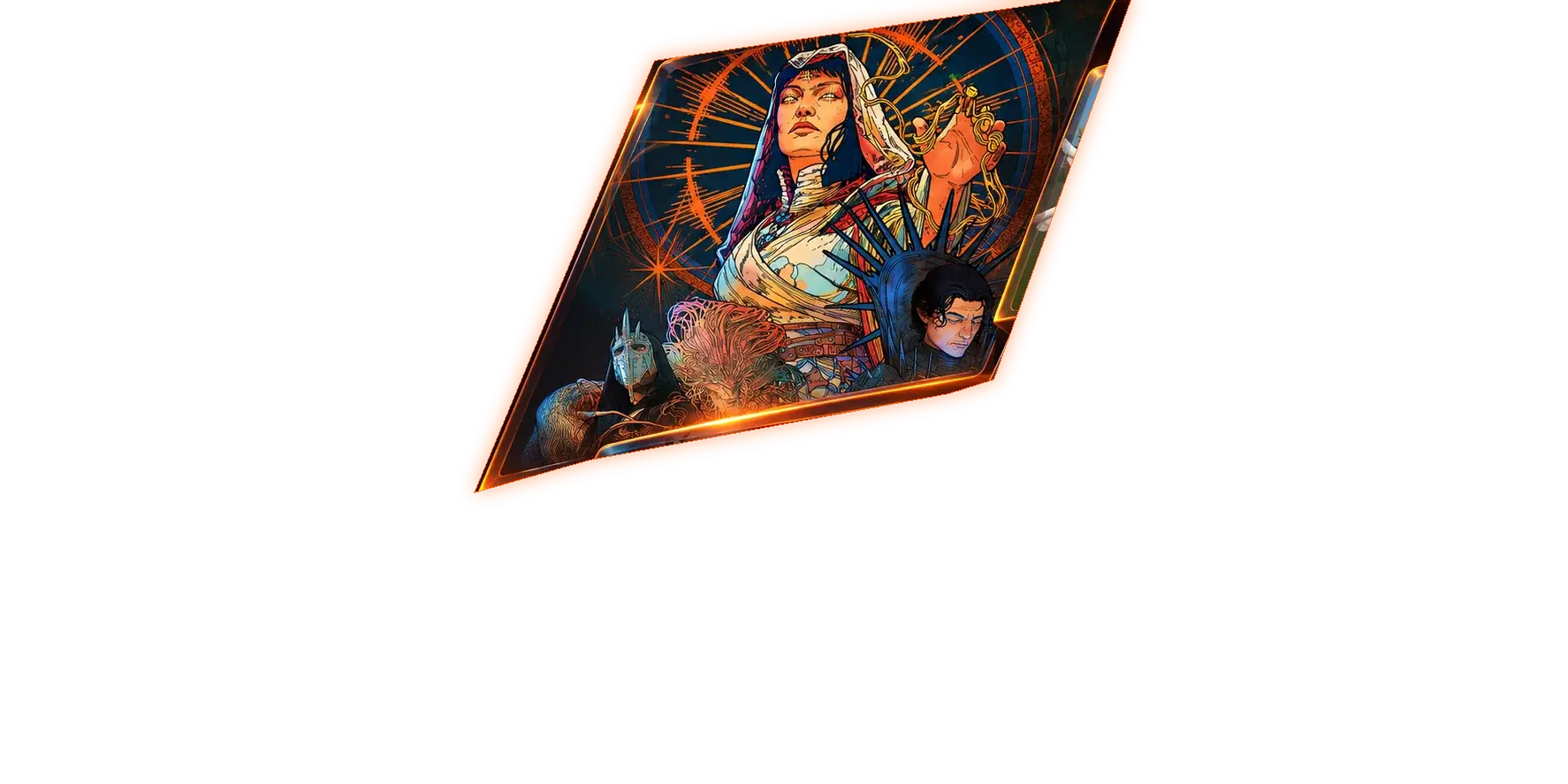
A lore-rich, tactical RPG with base-building set in the Indian Subcontinent.

View project
PC

Bringing the world-famous WWII tabletop wargame to PC. Command infantry, armour and artillery in tactical battles where positioning, suppression and…

View project
3D ARTANIMATION

We created 3D models and animations for the Ultramarines and more, bringing Warhammer 40,000’s most recognisable Space Marine Chapters to the…

View project
DLC DEVELOPMENTGAME DESIGN

Bringing to life one of the IP’s best-performing and largest DLC packs was an absolute joy.

View project
DLC DEVELOPMENTGAME DESIGN

Much like the Steam reviews, working on this visually stunning kingdom battler was an overwhelmingly positive experience.

View project
SWITCHXBOX SERIES X|SPS5

A magical action RPG with slimey 3D platforming.

View project
GAME DEVELOPMENTMULTIPLAYER

A reimagining of the age-old classic by Mega Cat for Atari. Play with up to 8 friends in a variety of game modes and choose from a wide range of…

View project
MOBILE

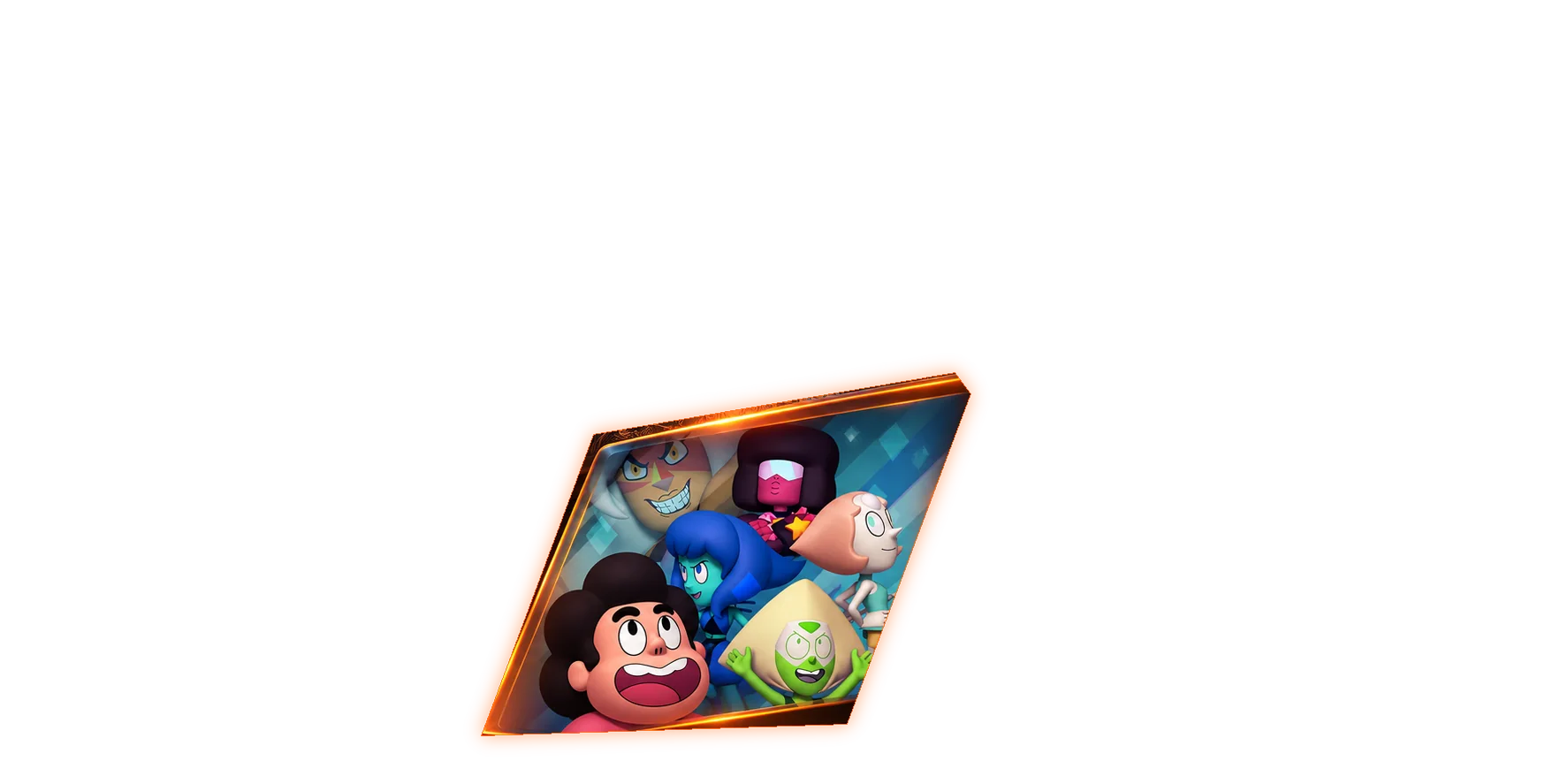
Our 3D team created every asset for this idle-tapper based on Cartoon Network’s popular show.

View project
SWITCHPS4PS5

A pixelated turn-based RPG adventure, a love letter to both wrestling and classic RPGs with iconic heroes such as Macho Man, Jake the Snake Roberts…

View project

ENGINES & TECHNOLOGIES

  • Unity
  • Unreal Engine
  • Roblox Studio
  • Blender

PLATFORMS

  • PC
  • Console
  • Mobile
Tell us about your project

Not sure what you need? We’ll help you scope.

Testimonials

Real feedback. Lasting partnerships.

Meet Our Core Team

Anything is possible when you work with the right people!

Illustrated portrait of Ali Ihsan

Ali Ihsan

CEO

Illustrated portrait of Nauman Azhar

Nauman Azhar

COO

Illustrated portrait of Adnan Ayub

Adnan Ayub

Art Director

Illustrated portrait of Omar Farooq

Omar Farooq

Engineering Director

Illustrated portrait of Uzair Mir

Uzair Mir

3D Art Lead

Illustrated portrait of Shehriyar Kamal

Shehriyar Kamal

Business Director

Illustrated portrait of Seb Downie

Seb Downie

Partner

Talk directly with the people who’ll build your game.

Get in touch

Start a Project

Need help with what you’re building?

Write to bd@frag-games.com, or Shehriyar Kamal (Business Director) at shehriyar@frag-games.com.

A general question, partnership idea or just want to say hi? Drop us a line.

4Rock&Games

4Rock&GamesINSERT COIN ▸ LIFE AT FRAG
01 / 13

We’re 100+ gamers powering a full-service game studio in the heart of Lahore. Established in 2013, our teams still sit under one roof, working as one unit: developers, artists, designers and QA side by side.

From our own IPs like Dastaan and Life in Willowdale to co-development, porting and art for partners such as Paradox, Netflix, Slitherine, Dovetail and Cartoon Network, studios bring us in as a true extension of their team.

10+Years of game crafting
100+In-house developers & artists
40+Games & ports delivered
5Platforms supported

We believe in

  • Geek cultureWe’re gamers at heart.
  • CandorBeing honest and real.
  • EfficiencyGiving more for less.
  • OwnershipMaking it as if it’s our own.
  • OpennessApproachable for enthusiasts and professionals alike.

Join the band

Gamers at heart? Plug in and make some noise with 100+ of us, under one roof in Lahore.

  • Headline gigs, big IPsPlay the big stages: Paradox, Netflix, Slitherine, Dovetail and our own IPs.
  • One stage, one bandDevs, artists, designers and QA jamming side by side, every day.
  • Jam sessions between setsGame nights, Tekken, Mario Kart and table tennis between builds.
Audition for the band

Your email app opens with your application ready. Attach your CV there, then press send.

Back to Field NotesBackend & multiplayer

Multiplayer Backend: Beginner’s Guide

I have a fairly simple routine. I wake up, work, go home, switch on my PlayStation, boot up Warzone and start finding a game. Soon a notification pops up, my best friend enters the party, all the way from Toronto, Canada.

I’ll admit, I was pretty sad when he moved away, but multiplayer games have helped shorten the distance considerably. Honestly, it still feels like he’s next to me hurling insults at the players far better than him. Most of us take it for granted how easily we can connect to each other while we’re gaming.

It might seem simple, but on the backend, there are loads of things that work together to optimize this multiplayer experience for us. From the development to the servers, you need a proper well-oiled team for it to work perfectly. Task Force 141 I’m looking at “you”!

Today, we’re gonna set our sights on the servers used for these games, but before we get into that let’s talk about the different types of multiplayer games at our disposal.

Types of Multiplayer Games

Broadly speaking, there are two kinds of Multiplayer Games.

Firstly, and probably the more well-known of the two, uses real-time communication. Or in layman’s terms, a game where every player is sending commands to the server at the same time. A good example of this would be games like Maelstrom or Minecraft.

The second one, usually for the more niche audience, is turn-based multiplayer games. Where only a single communication relay is working at a given time. This is the case for most Collectible Card Games such as Hearthstone or the magnificent game of chess.

One thing to note here is that turn-based doesn’t mean that only one side of communication is going on. The players take turns, but the server does not. It instead will keep relaying the information to every player, like in a game of Zynga Poker.

Each style of game has its own unique server requirements. You wouldn’t fill your gasoline-running car up with diesel now, would you?

Types of Multiplayer Servers

Now if you are unaware of what a server is, let’s bring you up to speed.

In simple terms, the server is the base where all the multiplayer communication is held. The player inputs the command. The server receives commands. The server executes the commands accordingly.

Just like the games we talked about, there are also two different types of servers available.

The first one is Player Hosted. Here, the server authority is given to a player, usually the creator of the multiplayer lobby. All the communication load is directed to the player. Hence, the server doesn’t have much to do. Which, in turn, leads to the server requirements being far lower than usual.

Moreover, you don’t need a separate server for such games, the player is one. Result? The costs keep dropping.

But sadly, everything can’t be perfect.

A major problem with it is that such a server is far more susceptible to cheating. Because the player who’s hosting the game can essentially do anything they want.

Plus Lag, the bane of the existence of every gamer. The server quality and speed are dependent on the host and well, you know the rest.

The other type of servers we deal with are known as Authoritarian. Which are the complete opposite of the Player Hosted Servers.

The game and the controls are hosted on the server itself. This greatly reduces the ease of cheating in games. Subsequently, it is mostly used in Massive Multiplayer Online games.

But everything comes at a price. And in the case of Authoritarian, this is literally the case.

Hosting such a vast amount of players on a server requires a lot of firepower, something that isn’t usually available that easily. And well if we’re talking about how high the price can go, just think Snoop Dogg.

Now we have a predicament.

What if your game falls into a wide range of categories? Are you gonna build a separate server for every single thing?

If you can, I really envy you.

But if you’re like us and the vast majority of game dev studios out there, the more reasonable option would be getting the services of a server stack.

3rd-Party Servers

Now, everyone can’t afford to have their server stack. It’s expensive and hard to maintain. It’s not something people make just for the fun of it.

To tackle this, companies such as Unreal and Playfab started providing server services, hence the birth of 3rd Party Servers.

3rd Party Servers are a God-Send. It’s like having a puppy, but you don’t have to walk it, feed it or take care of it. It’s self-sufficient. If it’s sick it’ll fix itself, all you have to do is pay.

And you don’t have to worry about fixing it if it goes wrong, that’s the job of the service providers.

Then why do more and more servers keep coming into the market? It can’t be because of money, the maintenance alone costs a lot to make it slightly unfavorable. Moreover, coming into an already populated market is not the easiest task.

Let’s talk about that in the next section.

Problems with 3rd-Party Servers

One problem with each of these servers is their rigidity. Mostly because of the fact that they mostly have pre-defined use cases.

Although this isn’t necessarily a bad thing, this does take away some of the flexibility and creativity of the developer. You have a set of rules you’re bound to now and if you want a different function you will have to look elsewhere.

Now because of this, you’ll have to integrate multiple servers just to get it working the way you want. This may sound easy but let’s say servers usually don’t tend to play well on a team. Think Captain Price and Makarov.

I think we’ll call it a day for now. Let’s continue the discussion in the next blog post, where we’ll talk about our very own backend server stack, FBOMB!

Meanwhile, reach out to us at bd@frag-games.com, and let’s have a chat about the backend!

Work with us
Back to services

FBOMB

Frag Basic Online Microservice Backend — our Backend-as-a-Service (BaaS) for Unity and Unreal multiplayer games, built after years of hitting the walls of black-box services.

FBOMB is a Backend-as-a-Service, similar to PlayFab and GameSparks. We’ve worked with several such services on client products, and though their ease of use for quickly deploying server backends was admirable, whenever you needed custom server-side code they always gated development because of their black-box nature.

100k+users with minimal horizontal scaling
200+CCU per Medium AWS instance
2engine SDKs: Unity & Unreal

Technology stack

FBOMB was initially built for pseudo real-time games that scale to 100k+ users with minimal horizontal scaling. The stack was chosen with exactly that in mind.

Java 8

Akka

An actor system that can process millions of requests in parallel with minimal overhead.

Database

MongoDB

The NoSQL database of choice: highly available data with minimal consistency issues, ideal for modern games.

Messaging

RabbitMQ

Our message queue: a modular message bus that’s easy to extend.

Networking

Netty

Games connect through our RESTful API or persistent socket connections, both served by this WebSockets framework.

Performance & auto-scaling

Using stress-testing frameworks, we’ve tested systems built on FBOMB to scale to 200+ CCU per Medium AWS instance — on par with solutions from top-tier game companies. Services can also be configured to auto-scale on demand, maximising availability.

Service customization

Bespoke development is part of our regular business model and sits at the heart of FBOMB: we modify the services for your use case, enabling huge cost optimisations — no source code licence required. Customization work is billed at discounted rack rates, currently $30 / hour.

Features & pricing

FBOMB’s feature set is split into two pools, Base and Pro. All licences are perpetual and per product.

Base licence
$1,499

Perpetual, per product

  • Authentication
  • Real-time chat
  • Inbox
  • Data services (game state, metadata)
  • Push notifications
  • In-apps with purchase verification
  • Leaderboards
  • Real-time and RESTful endpoints
  • Game admin portal
  • Quick deployment
Pro features
$500 / feature

À la carte, on top of Base

  • Teams service
  • Match-making
  • Match server
  • Developer ops portal

SDKs for Unity and Unreal are included for quick integration, communicating over HTTP or sockets. The feature list is continuously updated and existing services are consistently optimised.

Source code licence
$20k single product
$50k unlimited products

Full feature set · 1 year of Bronze support · 3 years of free upgrades

  • Each licence allows perpetual use
  • No resale of the software licence
  • Each licence allows a single production use
  • 3 months of Bronze support with every licence purchase
  • Free updates for 1 year after purchase

Support tiers

Basic troubleshooting and consulting are free after licence purchase. Any successful game needs a dedicated DevOps team, so we offer a support resource at three levels.

Bronze
Free / month

No SLA, 24-hour turnaround, partial allocation.

Silver
$800 / month

90% uptime, 8-hour turnaround, part-time resource.

Gold · recommended
$2,400 / month

98% uptime, 30-minute turnaround, full-time resource.

We charge for a single resource, but a larger support team stands behind it so there’s always coverage when you need it. Support resources are DevOps engineers who monitor your game’s performance to solve problems before they happen.

FBOMB hosting

Shared hosting
$250 / quarter

Supports 500 CCU (10k DAU).

Dedicated hosting
Custom

Get in touch with sales for a quote. We support all major clouds and are happy to help with custom deployments.

Ready to plug in FBOMB?

Tell us about your game and its multiplayer needs. Email bd@frag-games.com or use the form.

Start a Project